Burst Pipe Water Damage in Pflugerville, TX
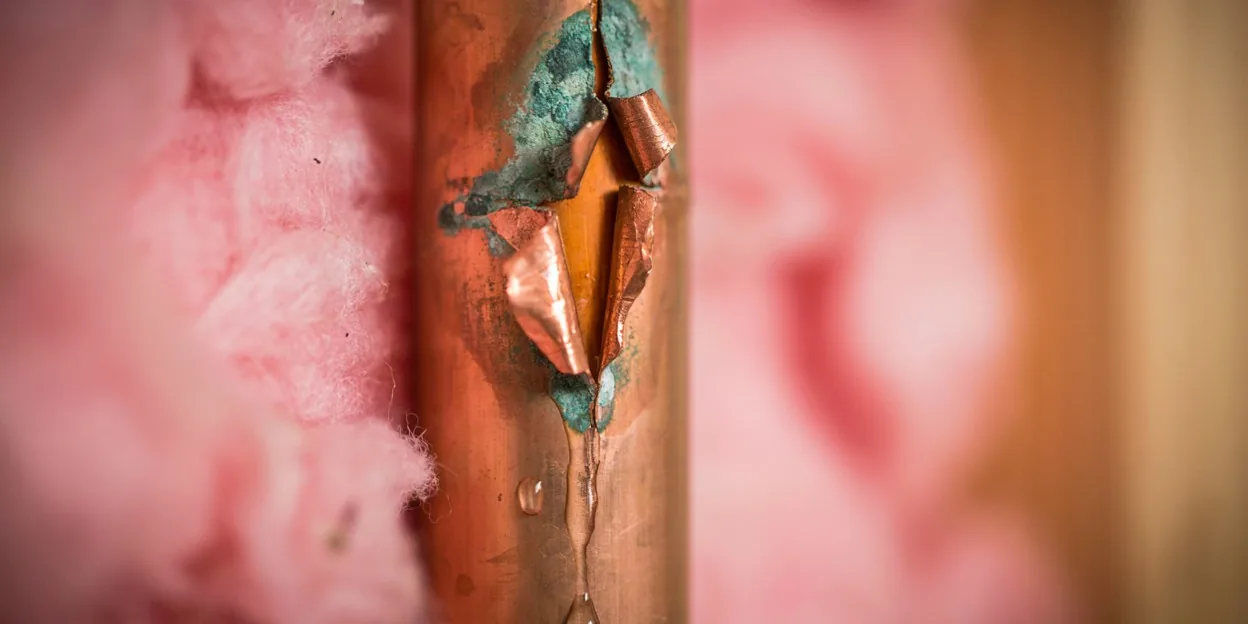
The power came back on Wednesday afternoon after two days of rolling outages, the house warmed up, and an hour later water started running out of the ceiling light in the dining room. The supply line to the upstairs bath had frozen in the attic on Monday night and split, and the ice that plugged it just melted. This is what February 2021 looked like in Pflugerville, and January 2024 repeated it on a smaller scale. This site routes your call to an independent local provider who handles burst pipe water damage in Pflugerville and across northeast Travis County.
What a split attic line does to the rooms below it
Water from an attic break falls onto the insulation, soaks through it, and pools on the top of the ceiling drywall until the drywall sags or lets go. Whatever does not come through the ceiling runs to the nearest wall and follows the studs down to the slab. So the crew meters the ceiling, then every wall below the break, then the floor along those walls. Wet blown insulation comes out, because it will not dry in place. Ceiling drywall that sagged comes down. Walls that only wicked water at the base can often be dried after the baseboard is pulled.
The crew also checks the rooms on the far side of the wet walls, because water inside a wall cavity does not respect which room the stain is in. Structural drying equipment goes in once the wet material is out.
The first hour after the ceiling starts dripping
Close the main valve at the garage wall or the curb box, and open a faucet at the lowest point in the house to drain the lines. Switch off the breaker for any room where water is coming through a fixture or a fan. Poke one small hole in the lowest point of a bulging ceiling with a screwdriver and set a bucket under it so the water drains in one spot instead of bringing the whole sheet down. Photograph everything. Then call.
Which materials a freeze break usually takes
Blown-in attic insulation that got wet is a loss. Ceiling drywall that sagged is a loss. Carpet pad under the drip is a loss, and laminate flooring that sat under water for a day usually is. Drywall on the walls, framing, tile, and most cabinets can often be dried. The plumber repairs the line, and in a house that split once, many Pflugerville homeowners have the exposed attic lines insulated or rerouted while the ceiling is open.
Why Pflugerville houses freeze harder than the weather suggests
Most houses here were built for heat, not cold. Supply lines run through unconditioned attics and along garage walls, the water heater often sits in the attic, and the insulation on those lines is thin or missing. When the temperature stayed below freezing for more than five days in February 2021, lines split across every subdivision from Windermere to Falcon Pointe. The city's water plant lost power the same week, and Pflugerville was under a boil notice from February 15 until February 24, so a house that lost pressure that week may have had a break nobody found until the pressure came back.
If the line that split was under the slab rather than in the attic, the job starts with slab leak detection. If the water heater itself was the source, water heater leak cleanup covers what that tank did on the way down. The year your house was built tells the crew whether to expect copper or PEX in the attic, and your Travis Central Appraisal District record has that date if you do not.
A pipe that froze and split is the kind of sudden loss most Texas policies respond to. Ask the crew to photograph the break, the insulation, and every wet room before anything is removed.
Call about the line that split
Say where the break was, whether the water is off, and which rooms below it are wet. Tell us if the ceiling is sagging anywhere. Call (512) 855-6202 and describe what the thaw left behind.